Insights
Insights
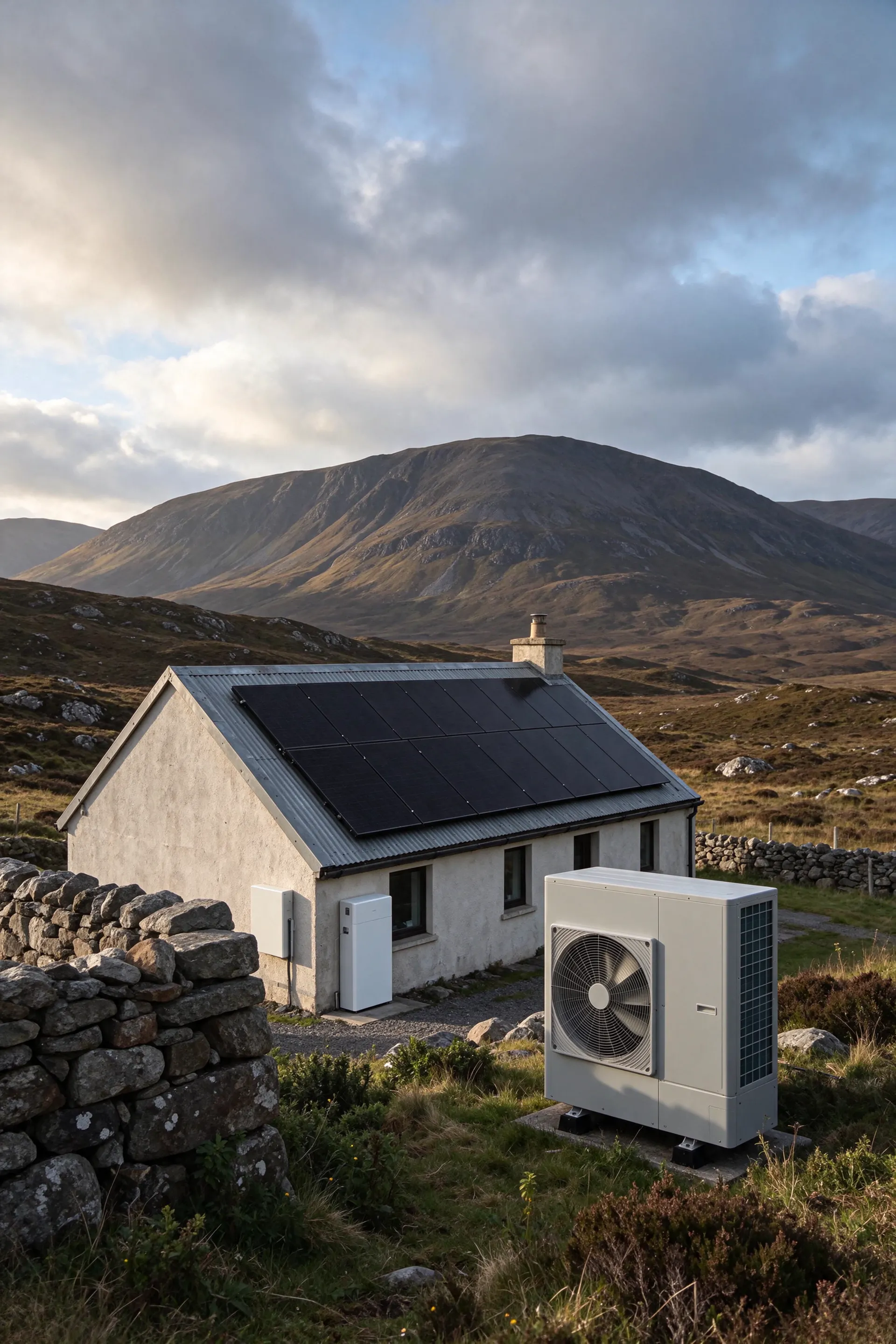
Quick answer
Our insights hub brings together articles and guides on solar panels, battery storage and air source heat pumps in Scotland. While articles from our editorial team are being prepared, our FAQ, glossary and area guides answer the most common questions.
Key facts for Scotland
Key facts for Scotland
Last updated: 28 October 2026
- Solar panels generate electricity from daylight, including on cloudy Scottish days — output is highest from spring to early autumn.
- Air source heat pumps deliver multiple units of heat for every unit of electricity consumed and work in cold Scottish winters.
- Battery storage lets you use solar surplus in the evening instead of buying from the grid at peak prices.
- All systems are priced at survey with no obligation, and installed through MCS-certified partners.
Insights
Quick answers about solar and heat pumps in Scotland
Yes. Solar panels respond to daylight rather than heat, so they generate on cloudy days too, just less. Output is highest from spring to early autumn and lowest in midwinter. Your survey gives expected generation for your roof and location, not a generic figure.
Often yes, depending on insulation, radiator sizes and heat loss. A proper heat loss survey checks whether your home is suitable and what, if anything, needs upgrading. Many older Scottish homes can work well with a heat pump when correctly designed.
Our glossary explains MCS, SEG, DNO, G98/G99, kWp, heat loss surveys and other industry terms in plain English. The FAQ page covers the most common questions Scottish homeowners ask about solar, batteries and heat pumps.
Last updated: 28 October 2026 · Reviewed by the Scottish Energy Efficiency team