Air source heat pumps
Air Source Heat Pumps
Quick answer
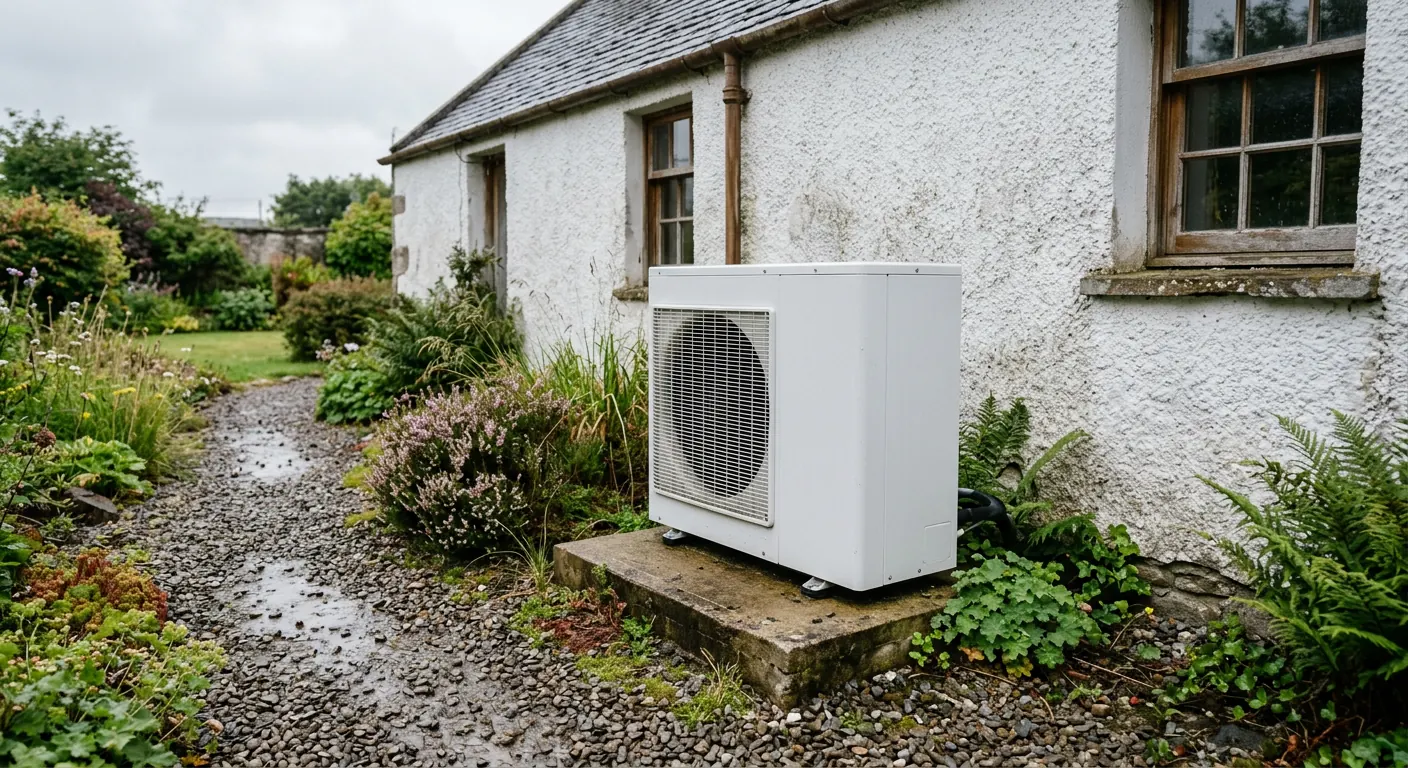
An air source heat pump delivers multiple units of heat for every unit of electricity it consumes, replacing gas or oil heating. We connect you with MCS-certified installer partners who carry out a heat loss survey and design the system for your home. Price is confirmed on your written quote after a no-obligation survey.
How it works
Heat from the outside air, even in winter
Efficient by design
An air source heat pump delivers multiple units of heat for every unit of electricity it consumes.Replaces gas or oil
It provides space heating and hot water, so you can move away from fossil-fuel boilers.Pairs with solar
A heat pump runs on electricity, and solar panels generate electricity — so they work well as one system.Designed for your home
A heat loss survey works out the right unit size, radiator sizes and hot water cylinder for your property.Low, steady warmth
Heat pumps work best running at lower temperatures for longer, keeping rooms at an even, comfortable warmth.Priced at survey
Costs are confirmed on your written quote, based on your actual property.
Your options
Paying for your system, explained honestly
Interest-free credit of up to £30,000 is available, subject to status and affordability. Terms and conditions apply. We explain your options honestly at your survey without promising amounts. VAT treatment of heat pumps, solar panels and batteries follows current HMRC rules.
We install through MCS-certified partners.
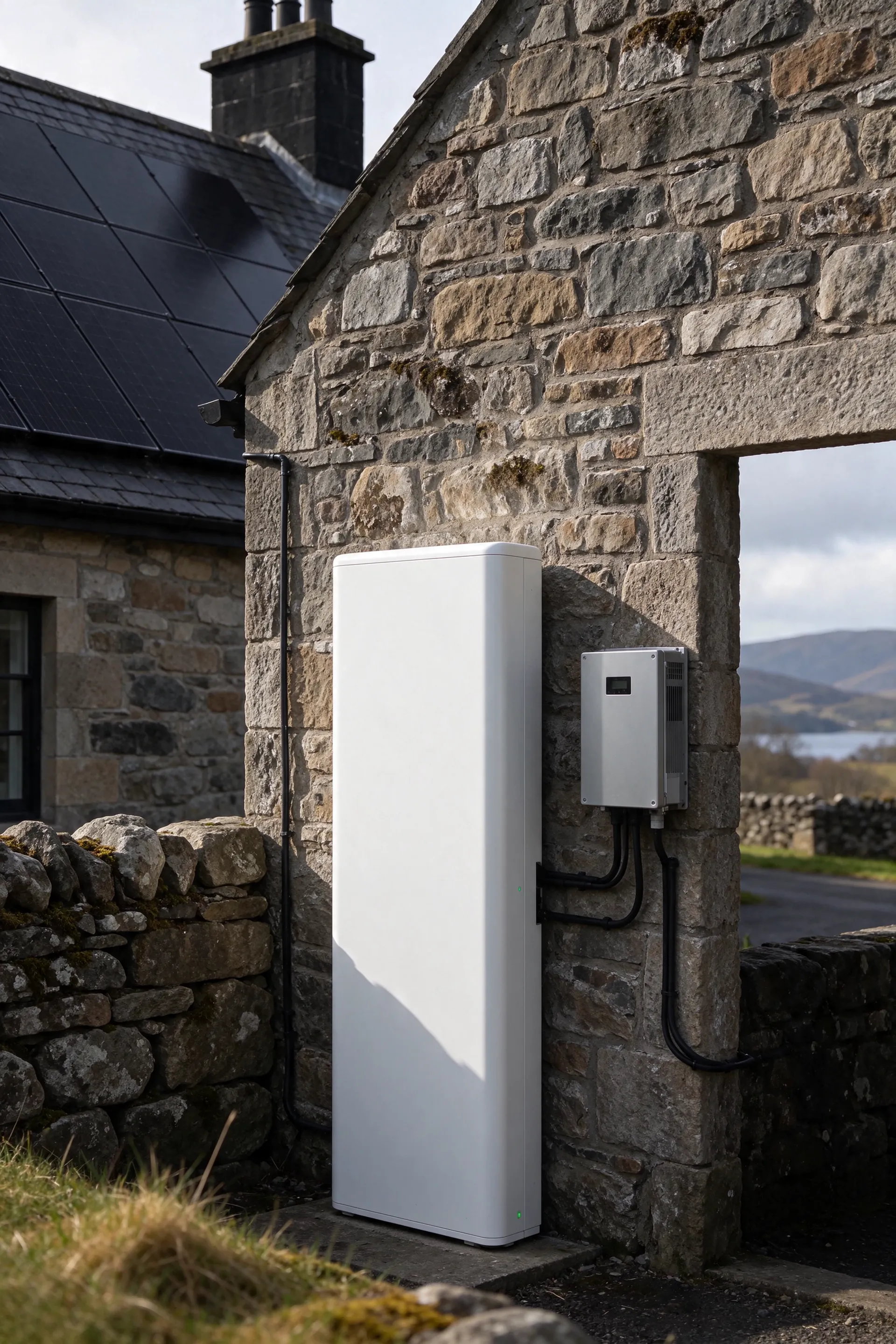
Pair with solar panels or add a battery.
If your home is off the gas grid, our sister site Off Grid Heat Pump Scotland focuses on heat pumps for rural properties. For more on heating options generally, see Low Carbon Heating Scotland. Part of the Scottish Energy Efficiency network.
Compare
Heat pump compared with a boiler
| Feature | Air source heat pump | Gas, oil or LPG boiler |
|---|---|---|
| Fuel | Electricity | Gas, oil or LPG |
| Can be powered by your own solar | Yes | No |
| Burns fossil fuel at home | No | Yes |
| Works best with | Lower flow temperatures and good insulation | Higher flow temperatures |
| Price | Priced at survey | Priced at survey |
Heat pump questions
Air source heat pumps in Scotland
Many air source heat pumps on houses in Scotland can be installed under permitted development rights, without a full planning application, as long as certain conditions are met. Rules differ for flats, listed buildings and conservation areas. Your installer partner will advise, but always confirm with your local council planning department before installation.
Yes, when it is correctly sized. Air source heat pumps are designed to keep working in cold weather, and they are widely used in colder countries than Scotland. The key is a proper heat loss survey, suitable radiators and sensible insulation. Your installer partner designs the system around your home rather than a rule of thumb.
Interest-free credit of up to £30,000 is available, subject to status and affordability. Terms and conditions apply. If you would like to spread the cost, mention it when you enquire and the options will be explained alongside your written quote.
Call us on 0141 230 0198 or fill in our contact form. We will arrange a no-obligation survey at your home, then provide a written quote with system design and costs based on your actual property.
In most cases, yes. A battery can often be added to an existing solar system, though it may need a compatible inverter or a separate battery inverter. Your installer partner checks your current equipment during the survey and confirms what is needed, and the price, on your written quote.
Related guides
Keep reading
Key facts for Scotland
Key facts for Scotland
Last updated: 28 October 2026
- An air source heat pump delivers multiple units of heat for every unit of electricity consumed.
- It replaces gas, oil or LPG heating with efficient electric heating and hot water.
- A heat loss survey sizes the unit, checks radiators and confirms suitability for your home.
- Heat pumps work best at lower flow temperatures with good insulation.
- Many installations qualify for permitted development without a full planning application.
- We install through MCS-certified partners.
Last updated: 28 October 2026 · Reviewed by the Scottish Energy Efficiency team